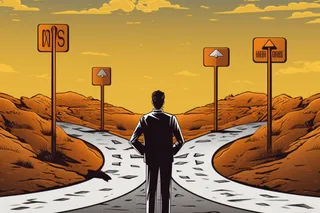
Not having a website doesn't have to be a bad decision. A mistake could perhaps just be not knowing the arguments for both variants and not considering them. Whether you are a small business owner, a startup, or an established business, understanding the importance and potential of a website is key to your success in the digital age.
Introduction
In today's digitally connected world, more and more entrepreneurs and business owners are asking the key question, "Does my business need its own website?" This question is especially relevant at a time when social media and online platforms offer alternative ways to present yourself on the internet. However, despite the growing popularity of these platforms, the importance and value of the website remain unshakable.
In this article, we'll look at the various aspects and arguments that play a role in deciding whether or not having a website is essential for your business.
Why Your Business Might NOT Need a Website
In this section, we'll focus on the arguments that can lead to the conclusion that your business doesn't need a website. While it seems like a website is a necessity in the digital age, there are certain situations and circumstances where this may not be true.
1. Strong social media presence
Nowadays, many businesses are successfully using social media as their main platform for communicating with customers. If your business has a strong and active social media presence that effectively attracts and retains customers, you may not need a separate website.
But beware - Social networks do not belong to you and the rules of the game are determined by others.
2. Local business with a solid customer base
For small, locally focused businesses that rely on personal referrals and have a solid customer base, a website may not be an immediate priority. These businesses can operate and grow effectively through traditional marketing channels and personal relationships.
3. Low budget and limited resources
Start-ups and small businesses on a tight budget may have difficulty financing and managing a professional website. In such cases, the investment in the website may be perceived as redundant or unsustainable.
4. Use of alternative online platforms
Some businesses can effectively use alternative online platforms, such as marketplaces like Amazon or Etsy, where they can showcase and sell their products without the need for their own website.
5. Specific type of business
Some specific types of business, such as contractors who predominantly have one large and stable client, may rely mostly on personal contacts and therefore may not find their own website necessary.
6. Barriers to technological knowledge
For some entrepreneurs, the issue of incorporating a website into their business can be challenging, requiring skills that they are unwilling or unable to learn or pay for.
While there are legitimate reasons why some businesses might not need a website, it's also important to know the reasons that could lead to the opposite conclusion.
Ten Reasons Why You Need a Website
In this section, we'll focus on the key reasons why any entrepreneur or business should consider creating and maintaining their own website. While there are situations where a website may not be necessary, for most businesses, a website is an invaluable tool for growth and success.
1. Increase credibility
A website gives your business a professional look and makes it more trustworthy. Without a website, potential customers may doubt the legitimacy of your business.
2. All-day availability
Unlike a physical store, which has limited opening hours, your website is available 24/7. This allows customers to access information about your products and services at any time.
3. Expanding Market Reach
A website allows you to reach a wider audience. You can reach customers not only in your location, but all over the world.
4. Improve communication with customers
The website provides a platform to communicate effectively with your customers, whether through blogs, the FAQ section, or through forms.
5. Increase sales
For e-commerce businesses, a website is essential. But for other types of businesses as well, a website can increase sales by providing an additional channel for transactions.
6. Marketing Opportunities
A website is the foundation for a variety of digital marketing strategies, including SEO, PPC advertising, social media, and email marketing.
7. Collecting feedback
The website makes it easy to collect customer feedback through reviews, questionnaires, and polls.
8. Presentation of a portfolio or catalogue
For businesses that offer products or services, a website is the perfect place to showcase a portfolio or catalog, making it easier for customers to make a decision.
9. Competitive Advantage
Having a high-quality website can give you a competitive edge in the eyes of customers who compare different businesses online.
10. Measurability and analytics
Websites allow you to track and analyze traffic and user behavior, providing you with valuable insights to optimize your business and marketing strategies.
Given these reasons, it's clear that a website can be a valuable asset for most businesses. It provides a platform to increase credibility, expand reach, improve communication and sales, and offers a myriad of marketing and analytics opportunities. In today's digital world, a website is often the key to business success and growth.
The Reality of Digital Marketing Today
In this section, we will focus on the current trends and realities of digital marketing that are influencing business today and in the coming years. The evolution of technology, changes in consumer behavior, and the COVID-19 pandemic have dramatically transformed the digital marketing space, which has had a major impact on how businesses approach online presence and promotion.
1. Moving to digital
The COVID-19 pandemic has accelerated the shift to digital channels. Businesses that used to rely on traditional marketing or face-to-face selling are now moving their operations online. Websites have become essential for maintaining visibility and reach.
2. Increased emphasis on e-commerce
E-commerce has experienced a huge increase, requiring businesses to have functional and user-friendly online stores. Websites have become crucial for selling products and services.
3. The Importance of SEO and Organic Search
SEO (Search Engine Optimization) is more important than ever. With the growing number of online businesses, it's essential that your website appears in top positions on search engines to attract organic traffic. If you want to learn more about SEO, don't miss my article What is SEO.
4. Personalization and targeted content
Consumers expect a personalized experience. Websites that offer targeted and personalized content have a better chance of engaging and retaining customers.
5. Growth in Social Media Usage
Social media is becoming increasingly important for brands, but leveraging it effectively requires fostering a strong website that serves as a central hub for content and information.
6. The Importance of Video Content
Video content is becoming more and more popular. Integrating videos into websites helps improve the user experience and increases user engagement.
7. The Importance of Mobile Optimization
With an increasing number of users accessing the internet through mobile devices, it is essential that websites are optimized for mobile devices, which improves the user experience and promotes SEO.
8. Use of data and analytics
Data and analytics play a crucial role in understanding customer behavior. Websites provide valuable data that can help make decisions and optimize marketing strategies.
9. Security and Privacy
With growing concerns about data protection and privacy, it's important for websites to be secure and comply with regulations like GDPR.
10. Flexibility and adaptability
In a fast-paced digital environment, it's important for websites to be flexible and easy to adapt to new trends.
Digital marketing will continue to grow, and websites will play a key role in how businesses communicate with their customers, present their brands, and achieve their business goals. In this dynamic environment, it's important for businesses to keep their websites up-to-date, relevant, and aligned with the latest digital trends and best practices.
A website isn't just a digital business card – it's a dynamic tool that can transform the way your business communicates, sells, and grows. In today's digitally oriented world, a website is a key part of a successful business, and its importance will continue to grow. No matter the size or type of your business, a website can be a catalyst for growth and innovation.
How a Website Can Transform Your Business – Examples
1. To increase visibility:
• SEO and organic reach: For example, a small local store selling handmade products creates a website and optimizes it for search engines (SEO). As a result, they appear on the first page of search results, leading to a significant increase in traffic and sales.
• Social media: Social media integration allows a business to share content from its website across different platforms, thereby reaching more potential customers.
2. Building Credibility:
• Professional Design and Content: A local consulting firm updates their outdated website into a modern, professional-looking website with clear information about their services and expertise. This increases the confidence of potential clients in their expertise and professionalism.
• Reviews and testimonials: Displaying reviews and testimonials from satisfied customers on a website can significantly increase the trust of new visitors and support purchasing decisions.
3. To improve overall performance:
• E-commerce functionality: A retailer adds an e-commerce store to their website, allowing them to sell products online. This leads to an expansion of the customer base and an increase in sales outside of the store's physical location.
• Automation and efficiency: The business implements an online booking system on its website, which simplifies the booking process for customers while reducing the administrative burden.
4. Improve Communication and Customer Engagement:
• Blog and educational content: A company specializing in eco-friendly building materials will start publishing blogs and educational articles on its website on a regular basis. This content not only boosts SEO and attracts more visitors, but it also helps customers better understand the benefits of green building, supporting their purchasing decisions and building a deeper relationship with the business.
5. Using analytics to make better decisions:
• Visitor and customer behavior data: A small coffee shop will implement analytics tools on its website that allow it to track where its visitors are coming from, what pages they visit most often, and how long they stay there. This data helps the coffee shop better understand the preferences of its customers, leading to better targeting of marketing campaigns and product offerings tailored to the interests and behaviors of their clientele.
These examples show how a website can provide valuable opportunities for improving customer communication and making more informed decisions based on data and analytics. Thus, the website ceases to be just a digital business card and becomes an active tool for business growth and development.